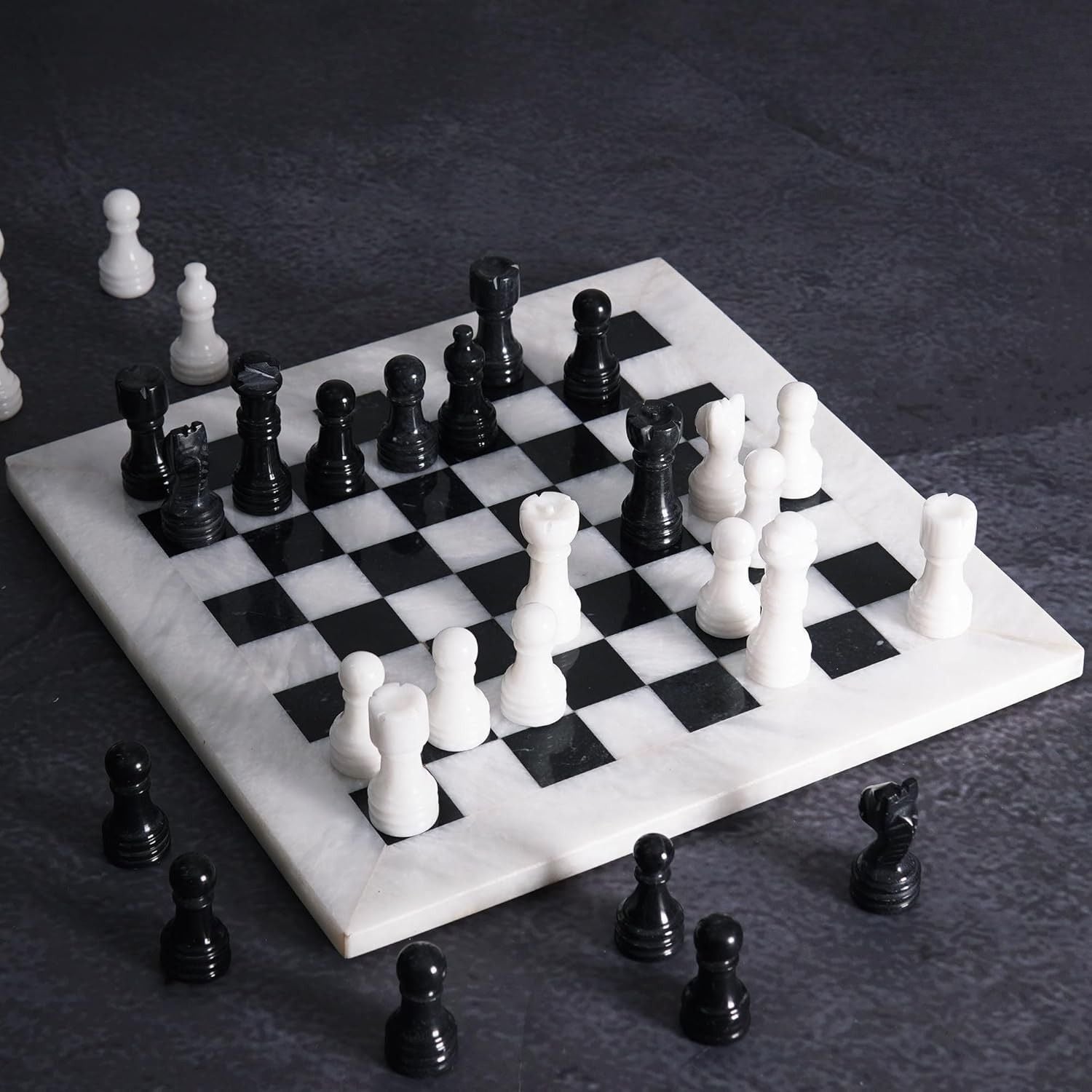
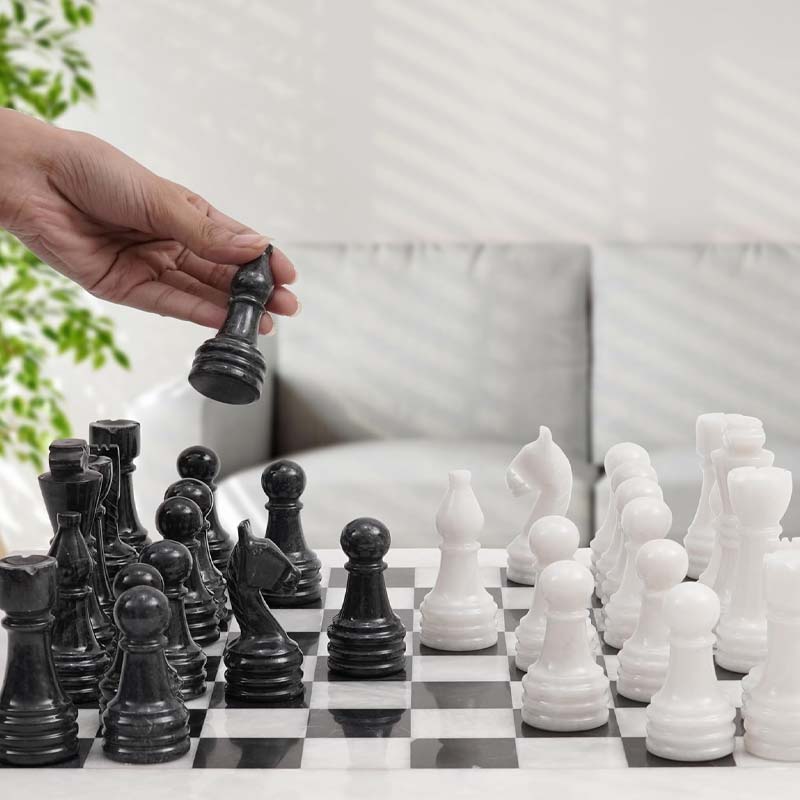
Capturing Pieces In Chess: Tips And Tricks

Chess combines mathematics, intelligence, patience, and an endless variety of moves and possibilities. There are countless chess tutorials online — but chess is more complex than most content suggests. No matter who you are playing, you can never afford to be overconfident. It is a game of intelligence, not just experience, and a single mistake can cost you the game in just a few moves.
Whether you are just starting out on a luxury marble chess set or looking to sharpen your game, these essential chess tips and tricks will give you the foundation every serious player needs.
10 Important Chess Tips Every Player Must Know
1 Know How Every Piece Moves

Knowing how every chess piece moves is the very first thing to master. The Pawn moves one square forward but two on its first move and captures diagonally. The Knight moves in an L-shape and is the only piece that can jump over others. The Rook moves any number of squares horizontally or vertically. The Bishop moves diagonally any number of squares. The Queen — the most powerful piece — can move in any direction across any number of squares. The King moves one square in any direction. Explore our best-selling marble sets where every piece is carved to reflect its role on the board.
2 Begin With the Pawn

Never underestimate the pawn. Always open with either the King's or Queen's pawn, advancing it two squares on the first move. This immediately opens lines for your Bishop and Queen to enter the game — giving you more options and greater control of the centre from the very start.
3 Release Your Knights and Bishops Early

Bring your Knights and Bishops into play before any other major pieces. These pieces help you control the centre of the board and set up attacks on your opponent's King. Developing them early also clears the back row so you can castle and protect your King — similar strategic thinking applies to other marble board games where early positioning determines the outcome.
4 Castle Early to Protect Your King

Castling is one of the most important defensive moves in chess. It tucks your King safely behind a wall of pawns and brings your Rook into a more active position. Once your King is protected, you can shift your full focus to attacking your opponent. Remember — you can only castle if neither the King nor the Rook has moved yet in the game.
5 Control the Centre of the Board

With your King castled and your pieces developed, it is time to take control. Move your pieces towards the centre and begin closing in on your opponent's King. Plan your moves strategically — read your opponent's intentions and think at least two or three moves ahead before committing. Central control gives every one of your pieces more squares to work with. See how players use this strategy with our luxury marble chess sets.
6 Know the Value of Every Piece

Every piece in chess has a point value. A smart player always considers whether a trade is worth it before making a move. Never sacrifice a high-value piece carelessly — and never risk your Queen to save a single pawn.
| Chess Piece | Point Value |
|---|---|
| Queen | 9 points |
| Rook | 5 points |
| Bishop | 3 points |
| Knight | 3 points |
| Pawn | 1 point |
7 Do Not Rush to Checkmate

One of the most common beginner mistakes is rushing to put the opponent's King in check too early. In doing so, players often expose their own King to danger without realising it. Chess rewards patience. Build your position carefully, maintain your defence, and wait for the right moment to strike. As the saying goes — good things take time. Plan your checkmate, do not force it.
8 Learn These Special Moves
A handful of special tactics can completely change the course of a game. Every chess player — beginner or advanced — should understand these moves before stepping onto the board. These are the moves that separate players who know the rules from players who know how to win. You can see them come alive on a hand-carved marble chess set where every piece has real weight.
- En Passant — A pawn captures a horizontally adjacent enemy pawn that has just advanced two squares, moving to the square the enemy pawn jumped over.
- Castling — The King moves two squares toward the Rook, and the Rook jumps to the other side. Only possible if neither piece has moved yet.
- Fork — One piece attacks two enemy pieces at once, forcing the opponent to choose which one to save.
- Pin — A piece cannot move without exposing a more valuable piece behind it to attack.
- Piling Up — Using multiple pieces to target one enemy piece simultaneously, leaving it with no escape.
- Skewer — A valuable piece is attacked and forced to move, exposing a less valuable piece behind it.
- Hanging Piece — An undefended piece left open to capture by the opponent, also known as "en prise."
9 Corner Your Opponent's King

The ultimate goal of chess is checkmate — and the best way to achieve it is to corner the King. Move your pieces toward the centre and create a web around the enemy King, cutting off every escape route. Attack from multiple directions at once to build pressure. But always remember — while you focus on the opponent's King, never leave your own King unprotected. A strong offence is built on an even stronger defence. Visit our customer gallery to see how players set up their boards for victory.
10 Never Underestimate the Pawns

The pawn may be the smallest piece on the board — but it carries the biggest secret in the endgame. When a pawn reaches the other end of the board, it can be promoted to any piece: Queen, Rook, Bishop, or Knight. This is called Pawn Promotion — and it can completely turn the game around. Always try to advance at least one pawn deep into enemy territory. That single pawn could become a Queen and win you the game. Find the perfect set to practice your endgame in our gifts under $100 collection.
💡 Remember: Chess is a game of patience and composure. Once the opponent's King is cornered with no legal move, the game is over. Use these tips wisely and you will always stay one step ahead.
Conclusion
Chess is one of the most rewarding strategy games ever created — and these ten tips form the foundation every player needs. Know your pieces, develop early, control the centre, protect your King, and always think ahead. Apply these principles consistently and your game will improve with every match you play.
Ready to take your chess experience to the next level? Explore Royal Bishop's range of handcrafted marble chess sets — played by over 50,000 chess lovers around the world.
Shop Marble Chess Sets →Frequently Asked Questions
Q1: Can two chess pieces occupy the same square?
No. Two pieces can never occupy the same square. A piece can only move to a square occupied by an opponent's piece by capturing it.
Q2: What is the secret to winning at chess?
Know your pieces and how they move. Players who deeply understand the movement and value of every piece make better decisions under pressure — and that knowledge is what separates winners from beginners.
Q3: What should my first move in chess be?
The most popular and effective opening move is to advance the King's pawn two squares forward, known as 1.e4. This immediately controls the centre and opens lines for your Bishop and Queen.
Q4: Does playing chess make you smarter?
Studies show that chess improves cognitive abilities, problem-solving, memory, and concentration. While it may not directly increase IQ, it consistently makes players sharper, more patient, and better at strategic thinking.
Q5: Who is the best chess player in the world?
Magnus Carlsen of Norway is widely regarded as the greatest chess player of his generation, having held the world championship title for over a decade.
Related Posts

How Each Chess Pieces Moves: A Step-By-Step Guide

Top 5 Best Opening Chess Moves

How to set up a chess board- Step By Step

Benefits Of Playing Chess

Pairing Marble Pieces With The Right Board Material

Marble Veining vs Structural Defects: A Guide to Stone Quality